# Fargate
## Overview
* No EC2 instance to manage (not like ECS). No nodes managed (not like EKS).
* Auto scaling. To scale, just create new task.
* Fargate + EFS = serverless
* Run containerized applications (e.g., Docker images).
* Very scalable but can require manual orchestration.
***
## Concept
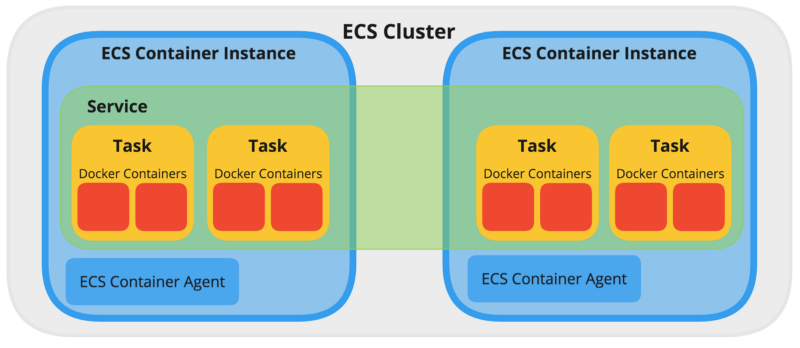
ECS Cluster
[Cluster](/aws/services/container/fargate.md): *logical* grouping of services or standard tasks
* [Namespaces](/aws/services/container/fargate.md): logical grouping of container or task definition within a cluster.
* [Task definition](/aws/services/container/fargate.md): definition of a service or task
***
## Pricing
Charges are based on the resources assigned to the container (RAM, CPU, etc.) and how long it runs for.
***
## Trivia
* Fargate tasks are given a minimum of *20 GiB* of ***free ephemeral storage.***
---
# Agent Instructions: Querying This Documentation
If you need additional information that is not directly available in this page, you can query the documentation dynamically by asking a question.
Perform an HTTP GET request on the current page URL with the `ask` query parameter:
```
GET https://mamawhocode.gitbook.io/aws/services/container/fargate.md?ask=
```
The question should be specific, self-contained, and written in natural language.
The response will contain a direct answer to the question and relevant excerpts and sources from the documentation.
Use this mechanism when the answer is not explicitly present in the current page, you need clarification or additional context, or you want to retrieve related documentation sections.